
Categories
- Blogs (25)
- Currency Solutions (2)
A check reader may occupy little counter space, but it sits at a critical control point in deposit acceptance, check conversion, branch operations, and back-office reconciliation. Selecting a china check reader manufacturer is therefore not a simple comparison of scan speed and unit price. The right supplier must understand document imaging, MICR data capture, software communication, production consistency, and the practical demands of international procurement.
For distributors, financial-equipment integrators, and operations teams, the decision affects more than the initial purchase. It determines whether equipment can be installed efficiently, read local check formats consistently, connect to the intended host environment, and remain serviceable after shipment.
A professional check reader captures the physical document and converts it into usable transaction data. Depending on the model and application, that usually includes magnetic ink character recognition (MICR), front and rear image capture, document presence sensing, and communication with teller, payment, or back-office software.
In the US market, reliable E13B MICR reading is usually a baseline requirement. Yet MICR performance alone does not define a usable system. Image quality matters when operators, exception-handling teams, or remote processing platforms need a legible record of the check. The reader should produce stable images across normal variations in paper stock, print density, document wear, and handling condition.
Transport design also deserves close attention. A reader that performs well on a clean sample set can create costly interruptions when it encounters curled checks, lightly damaged paper, or batches with different thicknesses. For low-volume teller use, compact size and ease of loading may take priority. For a cash office or centralized processing point, throughput, feeder capacity, jam recovery, and duty cycle become more significant.
The best specification is not always the highest one. A high-speed, multi-pocket configuration may be unnecessary for a retail site depositing a limited number of checks each day. Conversely, choosing a low-duty desktop reader for a busy financial operation can shift the apparent savings into staff time, exception work, and replacement cost.
A capable China check reader manufacturer should be evaluated as an engineering and export partner, not only as an equipment source. Product photographs and a basic specification sheet are useful starting points, but they do not answer the questions that determine deployment success.
Ask how the unit captures images, which image modes are available, and how the manufacturer validates recognition accuracy. For US deployment, confirm E13B MICR compatibility. If the equipment will be supplied to other regions, determine whether CMC-7 or additional local requirements apply.
Request test samples or documented test procedures that reflect the documents your operation expects to process. This is particularly important when checks may be worn, folded, lightly printed, or issued by multiple institutions. A supplier should be able to explain the device’s operating limits clearly rather than implying that every document condition will produce the same result.
Image resolution, image compression, color or grayscale options, and front/rear capture should be matched to the receiving system’s requirements. Higher image quality can improve review and archive value, but it may increase file size and affect transmission or storage planning. The correct choice depends on the host workflow.
A check reader is only productive when its data reaches the intended software reliably. Before placing an order, define the interface, operating system environment, driver or SDK requirements, data output format, and error-reporting method. USB may be sufficient for a single workstation, while a networked operating model may require a different approach.
Do not assume that a standard driver resolves application integration. A distributor building a bundled teller solution may require SDK documentation, sample code, command references, and access to technical personnel who can explain implementation details in English. A bank or financial-services operator may need the device to work within existing controls for user permissions, audit records, and exception handling.
Compatibility must be confirmed against the actual host application or test environment whenever possible. This step is especially valuable for OEM projects, where a private-label reader may need customized identifiers, interfaces, housing details, or firmware behavior.
Check readers contain precision transport parts, optical components, sensors, and electronic assemblies. Their consistency depends on component selection, assembly discipline, calibration, and inspection at the factory level. A single good sample does not prove that a production batch will deliver the same read performance.
Ask the supplier how it controls incoming components, functional testing, image verification, MICR reading tests, and final inspection. For export projects, also clarify packaging standards, carton drop protection, serial-number traceability, and spare-parts availability. These details reduce avoidable failures after goods arrive at a distributor warehouse or customer site.
Quality assurance should include practical handling checks. The manufacturer should test feeding, document transport, image capture, communication, and error conditions. If the unit is being customized, approval samples should reflect the final configuration rather than an earlier standard model.
A reader with accessible cleaning points, understandable status indicators, and replaceable wear components is easier to support in the field. Ask which parts are considered consumable, how cleaning is performed, and what maintenance interval is recommended for the expected document volume.
For dealers and importers, technical documentation is a commercial asset. Installation instructions, operator guidance, troubleshooting procedures, parts lists, and clear warranty terms help reduce support time. The same applies to firmware management: determine how updates are controlled, whether they can be applied remotely or locally, and how version compatibility is maintained.
Price matters, but the appropriate comparison is landed operational cost. Freight, import handling, local certification needs, spare parts, integration effort, expected service calls, and downtime risk can outweigh a small difference in factory pricing.
Procurement teams should convert technical discussions into a written configuration record. The order should identify the model, MICR standard, image-capture requirements, interface, power specification, language requirements, accessories, branding details, packaging, and agreed inspection criteria.
It is also useful to establish who owns each integration task. The equipment manufacturer may provide the hardware SDK and technical clarification, while the buyer or software partner completes application-level development. Clear responsibility prevents a common delay: hardware arrives on schedule, but no party has prepared the production software connection.
For larger deployments, begin with a controlled pilot. Test real checks from the target workflow, not only ideal samples. Measure read rates, image legibility, operator handling time, exception categories, and compatibility with the intended software. A pilot will reveal whether adjustments are needed in feeder configuration, document preparation, image settings, or application logic before a full rollout.
Many check-reader projects are part of a larger branch, exchange, retail, or cash-office equipment requirement. The buyer may also need currency counters, counterfeit detectors, banknote sorters, note strapping equipment, coin-processing machines, card devices, or queue-management hardware. Coordinating these categories through separate factories can increase inspection work, shipment complexity, communication gaps, and payment administration.
A one-stop supplier can simplify this process when it has genuine technical coverage across the equipment categories, structured quality control, and export experience. BCASH supports overseas buyers with check readers and writers alongside broader cash-handling equipment, helping procurement teams coordinate customized configurations, inspection requirements, and international shipment planning through one technical communication channel.
That approach is most useful when the buyer still maintains model-level discipline. Combining orders should not mean accepting vague specifications. Each device needs its own performance requirements, testing process, documentation, and service plan.
A dependable check-reader supply program starts with the documents your team handles, the data your software needs, and the service capacity your market requires. Bring those requirements to the manufacturer early. The supplier that responds with specific technical questions, test methods, and practical limits is more likely to protect your operation after the equipment leaves the factory.
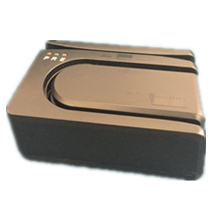 Choosing a China Check Reader Manufacturer
 Portable Card Counter for High-Volume Operations
 China Thermal Shrink Packing Machine Buying Guide
 Choose a Temper Proof Security Bag Supplier
 Coin Sorter and Counter Selection for Cash Offices
