
Categories
- Blogs (24)
- Currency Solutions (2)
A portable card counter can remove a surprisingly persistent bottleneck from field issuing, membership-card fulfillment, ticket distribution, and secure card inventory control. When staff count cards manually, a small discrepancy can delay reconciliation, create avoidable rework, or leave an operation unable to verify what was issued at a remote site. The right compact counter provides a repeatable count without requiring a fixed production-line installation.
For procurement teams, portability should not mean accepting consumer-grade construction or vague accuracy claims. A useful machine must handle the card material, surface finish, and batch volume in the actual application while remaining simple to transport, power, clean, and service. The selection process begins with the cards themselves, not with the smallest product on a catalog page.
A portable card counter is a compact feeding and counting machine that separates individual cards from a stack and records the quantity passing through its sensors. Depending on the configuration, it may support batch counting, accumulated totals, preset stop quantities, and basic error warnings for double feeds or feeding interruptions.
These machines are used for more than payment or access cards. Common applications include prepaid cards, loyalty cards, transit cards, gift cards, hotel keycards, ID cards, tickets, vouchers, gaming cards, and printed plastic blanks. Some operations also use compact counters for paper-based items such as coupons or tickets, but this requires confirmation that the feed system is designed for the material.
The counter’s role is straightforward: turn a manual inventory task into a controlled, measurable process. It does not generally inspect chip data, encode magnetic stripes, personalize cards, or verify cardholder information. Those are separate functions that may require card readers, writers, personalization equipment, or software integration. Procurement specifications should keep these requirements separate so a counting machine is not expected to perform functions it was never designed to provide.
A high speed stated under ideal conditions has limited value if the machine jams on the cards used in daily work. Card thickness, stiffness, edge quality, and surface friction all affect separation. Standard PVC cards may feed differently from laminated cards, paper tickets, embossed cards, RFID cards, or cards with a high-gloss coating.
Ask the supplier to confirm the supported thickness range and test representative samples where possible. This is particularly important for cards with uneven surfaces, raised printing, attached labels, perforations, or static buildup. A counter that performs well with clean, flat PVC stock may require adjustment or may not be appropriate for irregular media.
Hopper capacity is equally practical. A small hopper may be adequate for a mobile enrollment team issuing cards in batches of 50 or 100. A central fulfillment department handling thousands of cards per shift needs more capacity, a stable output tray, and an accumulated-count function that reduces interruptions. The best choice depends on the number of cards per batch, total daily volume, and how often the operator must relocate the machine.
For B2B purchasing, the specification sheet should be evaluated as an operating document rather than a marketing checklist. Several details have a direct effect on accuracy and labor efficiency.
The feed mechanism must reliably separate one card at a time. Look for adjustable guides, accessible feed rollers, and sensor logic that can identify double feeds or no-feed conditions. An operator should be able to clear a misfeed without dismantling the unit or losing the current count.
Double-feed detection is especially valuable when card packs must be reconciled to a controlled inventory record. Without it, two cards passing as one can create a count that appears correct on the display but is wrong in the issued quantity.
A useful portable unit should support basic free counting and batch counting. Free counting provides a total for an entire stack. Batch counting stops at a preset quantity, allowing staff to make controlled packs of 25, 50, or 100 cards. Accumulation retains the total across multiple loads, which is helpful when the hopper cannot hold the full inventory at one time.
Controls should remain understandable in a busy environment. Large displays, clear error indicators, and physical keys can be preferable to complicated menus when operators wear gloves or work at temporary service locations. If count results need to be recorded outside the machine, confirm whether the unit offers suitable reporting, printing, communication, or manual audit procedures.
Portable equipment has to match the way it is moved. Weight, handle design, case protection, and footprint matter when units are carried between branches, event sites, retail locations, or secure logistics vehicles. For field work, ask whether battery operation is available, what the realistic running time is, and whether the charger supports the destination market’s voltage and plug requirements.
Dust, paper fibers, and static can affect optical sensors and feed rollers. If the machine will be used in warehouses, transit environments, or high-volume ticket operations, routine cleaning access is not optional. A compact design that is difficult to clean often becomes less accurate over time, regardless of its initial performance.
A low purchase price can become costly if rollers wear quickly, spare parts are unavailable, or remote support is unclear. Request information on expected maintenance intervals, consumable or wear components, spare-part availability, warranty procedures, and troubleshooting support in English.
For distributors, OEM requirements may also be relevant. Private-label housing, control-panel language, packaging, manuals, voltage configuration, and carton markings can affect whether a product is ready for the intended channel. These details should be confirmed before production, not after shipment.
A portable counter is not automatically the best solution for every card operation. It works well when cards arrive or are issued in physical batches and staff need fast quantity verification. Examples include regional distribution centers, event credential teams, retail promotion programs, hotel groups, transit-card agents, and secure card-storage operations.
For centralized card production, the operation may need a more integrated solution. High-volume fulfillment can require automated feeders, reject handling, barcode validation, card personalization interfaces, or conveyor-based packaging. In that environment, a portable counter can still serve as a receiving-inspection or cycle-counting tool, but it should not be treated as a replacement for production automation.
The same distinction applies to secure payment-card environments. If the process requires chain-of-custody records, serial-number capture, or encrypted data management, counting alone is only one control point. The machine should fit within established inventory procedures, restricted-access policies, and audit requirements.
Before comparing quotations, provide the supplier with the card dimensions, thickness, material, finish, and expected daily volume. Describe whether cards are new, dusty, warped, embossed, printed, or attached to carriers. State the desired batch sizes and whether total accumulation is required.
It is also useful to confirm the destination country, electrical requirements, required manuals, packaging standards, and local compliance expectations. Importers should ask what inspection process is used before shipment and whether factory test videos, sample evaluation, or third-party inspection can be arranged. These steps reduce the risk of receiving a machine that is technically functional but poorly matched to the application.
BCASH approaches equipment sourcing with this application-first perspective: define the media, operating volume, required controls, and export conditions before finalizing the configuration. Clear technical communication at the quotation stage is usually faster and less expensive than modifying an unsuitable unit after delivery.
Even a well-selected counter needs a basic maintenance routine. Operators should remove dust and debris from the hopper and sensor areas according to the equipment instructions, inspect feed rollers for wear, and avoid forcing damaged or unsuitable cards through the machine. Storing cards flat and dry also reduces static, warping, and feed inconsistency.
Track recurring feed errors by card type, shift, or location. A pattern may point to contaminated rollers, incorrect adjustment, a changed card supplier, or material outside the supported range. This operational record gives maintenance teams and suppliers useful evidence instead of relying on a general report that the machine is “not counting correctly.”
The most effective portable card counter is the one that gives staff a dependable count at the point where inventory changes hands. Specify it around real card stock and real workflows, then support it with cleaning, training, and a clear service path. That is how a small mobile machine becomes a reliable control in a larger operation.
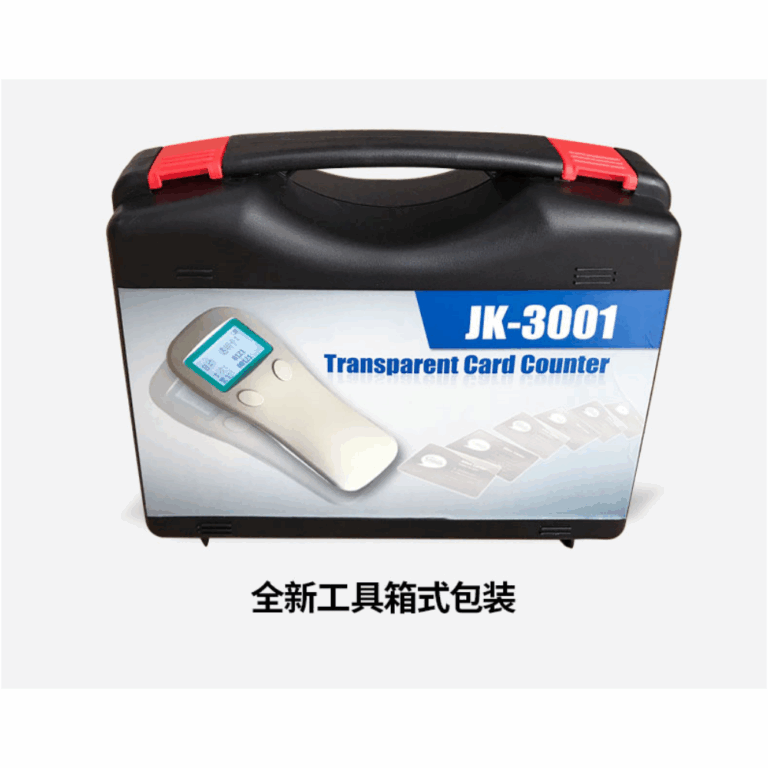 Portable Card Counter for High-Volume Operations
 China Thermal Shrink Packing Machine Buying Guide
 Choose a Temper Proof Security Bag Supplier
 Coin Sorter and Counter Selection for Cash Offices
 The Future of Cash Processing Will Be Hybrid
