A money counter can remove a major bottleneck from a cash office, but only when its capabilities match the notes, volumes, and controls of the operation. A machine selected on headline speed alone may count accurately in a retail back room yet create delays in a currency exchange, bank branch, or armored cash center where mixed denominations and suspect-note handling are part of every deposit.
For procurement teams, the decision is not simply between a basic counter and a higher-priced model. The right specification affects reconciliation time, cash-loss exposure, staffing requirements, service cost, and the confidence operators have in each counted batch. The most effective purchase process starts with the real cash workflow rather than a catalog comparison.
Start With the Cash Workflow
Define what happens to notes before and after counting. A supermarket cash office may receive separated single-denomination till drops that need fast piece counts and counterfeit screening. A financial institution or currency exchange may receive mixed denominations, notes in multiple conditions, and deposits that must be totaled by value. These are different applications, even if both are described as cash counting.
A standard friction-feed counter counts the number of notes passing through the machine. It is a practical choice for sorted, single-denomination batches and applications where an operator already knows the denomination. A mixed-denomination value counter identifies note denominations and calculates the value of the batch. Many models can also provide a denomination breakdown, serial-number capture, orientation recognition, fitness sorting, or suspect-note separation.
The operational question is straightforward: does the team need a piece count, a value total, or a verified audit trail? Buying a basic unit for a mixed-note operation can shift the reconciliation work back to the operator. Buying advanced sorting functions for simple, pre-sorted deposits can add capital cost without producing a meaningful return.
Match Money Counter Capacity to Peak Demand
Throughput specifications are useful, but maximum notes per minute do not tell the full story. A machine rated for high speed may slow when it encounters folded, worn, taped, damp, or heavily circulated notes. For this reason, procurement managers should consider both average daily volume and the concentrated volume that arrives during shift changes, end-of-day closeout, or armored-car collection windows.
Hopper capacity, stacker capacity, reject capacity, and continuous-feed capability deserve the same attention as speed. A counter that processes notes quickly but requires frequent stops to clear the stacker or remove rejects may not improve the full workflow. In high-volume environments, a separate reject pocket allows operators to continue counting while suspect, unreadable, or nonconforming notes are diverted for review.
Batching is another practical requirement. Adjustable batch settings support deposit preparation, cash drawer verification, and strap creation. Add and accumulation functions help operators combine multiple runs without manual calculation. These features are basic, but they reduce repetitive handling and make work instructions easier to standardize across shifts.
Detection Performance Is an Operating Control
Counterfeit detection should be assessed as part of the organization’s loss-prevention process, not as a check-box feature. Common detection technologies include ultraviolet, magnetic, infrared, image, and color-spectrum analysis. The equipment should evaluate multiple note characteristics and issue a clear alert when a note cannot be verified.
The required detection configuration depends on the currencies in circulation and the risks associated with the application. Notes with similar visual designs, regional circulation patterns, and frequent design updates can require currency-specific recognition parameters. A detector configured only for a generic note profile may not deliver acceptable results with local banknotes or cross-border currency flows.
Ask suppliers how a model handles new note series, whether software updates are available, and how the machine identifies counterfeit, suspect, damaged, double, chain, and half notes. A good answer should address the technology, the test process, and the service path for updating currency software. For banks, exchange operators, and cash logistics providers, serial-number reading and image-based verification can also support investigation procedures and internal audit requirements.
False rejects matter as much as detection sensitivity. If a unit rejects too many genuine circulated notes, operators may bypass the machine, disable functions, or spend excessive time reprocessing batches. Equipment should be tested with representative notes from the intended market, including worn and soiled circulation samples, not only clean demonstration notes.
Evaluate the Feed System and Note Condition Tolerance
Counting accuracy begins at the feed mechanism. Notes must be separated consistently before sensors can identify and count them. Double-note detection, thickness sensing, adjustable feeding, and effective transport components are particularly important when deposits include mixed note quality.
A cash center handling large volumes of recirculated currency needs a machine designed for demanding note conditions. Retailers with cleaner, lower-volume till deposits may have different requirements. Neither case is inherently better; it determines the suitable duty level, maintenance interval, and budget.
During evaluation, run actual deposits through the proposed model. Include notes that are lightly folded, dirty, soft, stiff, or unevenly aligned. Review the result after repeated runs rather than accepting a single successful demonstration. Consistent performance with real currency provides a better indication of field suitability than an isolated speed test.
Consider Integration, Reporting, and Operator Control
A money counter does not operate in isolation. Its output may feed into a branch reconciliation process, a retail cash-management system, a cash-in-transit record, or a daily finance report. Determine whether the machine needs USB, serial, LAN, printer, or system-integration options before purchase. For some sites, a printed count receipt is sufficient. For others, exported count records and serial-number data are necessary for traceability.
The user interface also affects accuracy. Operators should be able to select currency, counting mode, batch quantity, and detection settings without ambiguity. Clear error codes shorten troubleshooting time. Role-based settings can be useful where supervisors need to control configuration changes, especially in locations with multiple shifts and varying levels of staff experience.
For distributor and OEM buyers, display language, power plug, voltage, exterior branding, and currency software configuration should be reviewed early. These details are more efficient to confirm during product development and pre-shipment inspection than after machines arrive in the destination market.
Compare Total Cost, Not Unit Price
The lowest purchase price can become expensive if the machine needs frequent adjustment, lacks local-currency support, or has no clear spare-parts plan. Total cost includes expected service life, consumable and wear-part availability, cleaning requirements, software support, warranty coverage, shipping protection, and the time needed to train operators.
A supplier should be able to explain quality-control procedures, inspection standards, production traceability, and export packaging. International buyers should also confirm documentation requirements, communication channels for technical issues, and the process for handling warranty claims. Clear English technical communication is not a minor convenience when a machine is installed thousands of miles from the factory.
BCASH supports overseas procurement with cash-handling equipment, currency-focused detection configurations, factory quality inspection, and technical coordination for buyers seeking a one-stop sourcing partner. For multi-product projects, consolidating compatible counters, sorters, counterfeit detectors, strapping machines, and related equipment can simplify purchasing and help standardize operating procedures.
Build Maintenance Into the Operating Plan
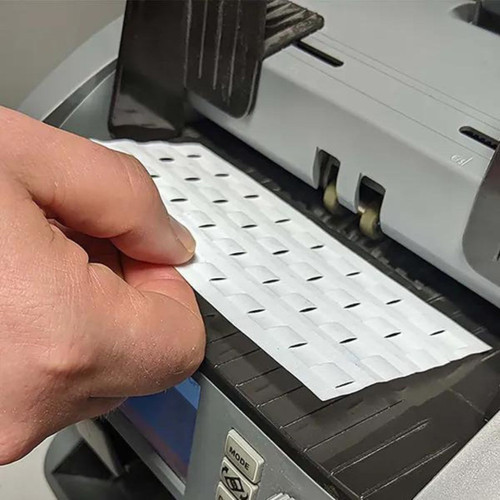
Even a well-specified counter will lose accuracy if dust, paper fibers, and residue build up on its sensors and feed path. Cleaning schedules should reflect note condition and usage volume. High-circulation environments often require more frequent cleaning than low-volume offices, and operators should use the approved method rather than improvised materials that can damage sensors or rollers.
Train staff to recognize common causes of count errors: poorly aligned notes, staples or clips left in deposits, folded corners, overfilled hoppers, and contaminated sensors. Keep an escalation process for repeated rejects or unusual detection alerts. Minor issues addressed early can prevent downtime during a critical cash-processing window.
The best purchase is the machine that makes the next deposit easier to verify, reconcile, and release. Specify it around actual notes and actual peak workloads, then require proof of performance before the order is finalized.

 How to Clean a Money Counter: A Practical Maintenance Guide
