A cash office can count every note correctly and still lose time at the final packaging stage. Loose bundles slow vault handovers, create inconsistent presentation, and make it harder to identify whether a packet has been opened or altered. A banknote strapping machine standardizes that last step by applying a secure band around prepared note bundles at a repeatable tension and cycle speed.
For banks, cash-in-transit operations, currency exchanges, casino cages, and retail cash centers, the right machine is not simply the fastest model on a specification sheet. It must suit the notes, packet sizes, band material, shift volume, and service conditions at the operating location. Procurement teams should evaluate the complete packing workflow rather than treating strapping as an isolated purchase.
What a banknote strapping machine does
A banknote strapping machine, also called a note banding machine, wraps a paper or film band around a stack of banknotes and seals it. The machine may use heat-sealing paper tape, adhesive paper bands, or plastic film, depending on the model and the operating requirement. The result is a compact packet that is easier to count, move, store, and audit.
In a typical cash-processing line, notes are first counted, authenticated, sorted by denomination and fitness, then stacked into a defined quantity. The operator places the stack in the strapping area, and the machine feeds, tightens, cuts, and seals the band. Some configurations support manual placement with an automatic strapping cycle; higher-throughput operations may require a more integrated packet-processing setup.
The operational gain is consistency. Manual paper straps depend on staff technique, adhesive quality, and the time available at the end of a shift. Machine strapping applies a uniform finish that supports clearer cash accountability between tellers, cash rooms, vaults, and transport teams.
Define the cash packet before selecting equipment
The most useful buying question is not, “How many straps per minute can it produce?” It is, “What packet must this machine process reliably?” That distinction avoids a common procurement problem: a machine that is fast with a sample stack but inconsistent with real circulation notes.
Start with the standard packet quantity. Many organizations process bundles of 100 notes, but the required stack thickness changes substantially by currency, note condition, and denomination. Worn, curled, polymer, or heavily circulated notes can behave differently from new cotton-paper notes. If your operation handles several currencies, confirm the minimum and maximum bundle dimensions across the full note range.
Band width also affects the finished packet. A wider band can provide stronger visual identification space for branch, date, teller, or denomination information. A narrow band uses less material and can improve speed, but it may be less suitable where detailed labeling or high handling strength is required. The choice depends on the custody chain after strapping.
For operations processing polymer banknotes, test actual local notes before release. Polymer notes can retain curl, develop static, and create a stack profile unlike conventional paper currency. A supplier should be able to confirm the supported stack range and provide practical test guidance rather than relying only on nominal dimensions.
Paper bands, film bands, and audit requirements
Paper banding is often preferred where the packet must carry printed operational information or where the organization follows established bank bundle conventions. Film strapping can provide a tight, clean finish and may suit certain internal logistics applications. Neither is universally better.
The correct material depends on handling conditions. If packets move through armored transport, multiple branches, or long-term vault storage, the band must remain secure without damaging notes or leaving residue. If the bundle is opened and reprocessed frequently, material cost and ease of removal become more relevant. Request samples of the finished strap and evaluate them after normal transport and storage handling.
Throughput should match the whole workcell
A strapping machine can become a bottleneck when its cycle time is lower than the output from counters and sorters upstream. It can also be oversized when a small cash office processes modest volumes at predictable times. The right capacity is based on peak packet demand, not only on average daily notes.
Calculate how many bundles are produced during the busiest hour, then allow for operator loading, verification, rejected bundles, consumable changes, and routine cleaning. A machine rated for a high theoretical cycle rate may produce fewer completed packets in a real environment if staff must frequently adjust stack alignment or replenish band rolls.
Consider the physical workflow as well. The machine should sit close enough to the counting and sorting equipment to avoid unnecessary handling, but with enough clearance for loading, maintenance, and replenishing consumables. A compact tabletop unit may suit a branch back office, while a central cash center may benefit from a dedicated packing station with packet-note counting, vacuum packing, or labeling equipment nearby.
Key specifications to verify before purchase
Specification sheets are useful, but they should be reviewed against the operator’s actual task. Ask the supplier to document the supported bundle width, height, and thickness; compatible band material and roll dimensions; strapping tension adjustment; cycle speed; power requirements; machine dimensions; and net weight.
Three areas deserve particular attention. First, confirm whether tension is adjustable. Excessive tension can deform soft stacks or mark vulnerable notes, while insufficient tension produces loose packets that can shift in transit. Second, check the sealing method and warm-up behavior. Heat-sealed systems require stable sealing performance across extended shifts and normal ambient conditions. Third, review sensor and jam handling. Operators need a clear indication when tape is low, a packet is mispositioned, or a feed path requires attention.
For international procurement, electrical configuration must be specified early. Confirm voltage, frequency, plug type, manuals, spare parts, packaging method, and the documentation needed for your destination market. These details are basic, but late clarification can delay deployment or create avoidable landed-cost issues.
Reliability depends on maintenance and consumables
Strapping machines are mechanically straightforward compared with high-end fitness sorters, yet they still depend on clean feeding paths, correct consumables, and consistent operator practice. Dust from banknotes, adhesive residue, worn cutters, and poor-quality paper bands can all reduce performance.
A practical maintenance plan includes daily visual checks of the band path and sealing area, regular removal of paper dust, inspection of cutters and rollers, and scheduled checks of tension and seal quality. The service interval should reflect note condition and duty cycle. A cash center handling heavily circulated notes will need more frequent cleaning than a low-volume office receiving mainly ATM-quality currency.
Consumables should be treated as part of the equipment decision, not an afterthought. Standardized band sizes simplify purchasing and reduce the risk of a machine sitting idle because the correct roll is unavailable. For distributors and importers, it is sensible to order an initial operating stock of bands and commonly replaced wear items with the machine shipment.
Evaluate the supplier as carefully as the machine
A strapping machine is often purchased alongside money counters, sorters, counterfeit detectors, vacuum packing equipment, and coin-processing machines. A supplier that understands the entire cash-handling process can help configure a more efficient station and reduce compatibility gaps between product categories.
Ask for evidence of factory quality control, pre-shipment inspection procedures, English-language technical communication, OEM options, and spare-parts availability. If the equipment will be sold through a dealer network, confirm branding options, carton markings, manuals, and warranty responsibilities before the first order. Buyers should also clarify what remote troubleshooting information the supplier requires, such as photos, video, serial numbers, or error descriptions.
BCASH supports overseas buyers with cash-handling equipment selection, quality inspection coordination, customization communication, and export-oriented purchasing support. This approach is especially useful when a strapping machine is one component of a broader cash-processing procurement project.
A better standard for finished cash bundles
The value of automated strapping is not limited to a cleaner-looking packet. It creates a repeatable handoff point in the cash cycle: counted notes become a defined bundle, prepared for custody, transport, storage, or reconciliation. When the machine, band material, and packet standard are selected together, the result is less manual rework and more dependable control at the point where cash changes hands.
Before committing to a model, send representative banknotes, confirm the required bundle format, and test the finished packet under normal operating conditions. That small verification step is often what turns a machine purchase into a dependable part of the cash office.

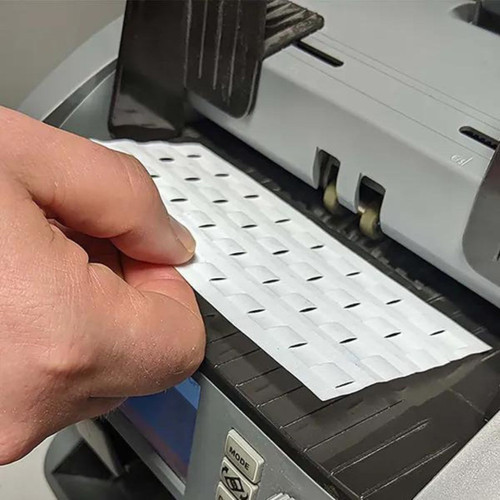 How to Clean a Money Counter: A Practical Maintenance Guide
