
Categories
- Blogs (23)
- Currency Solutions (2)
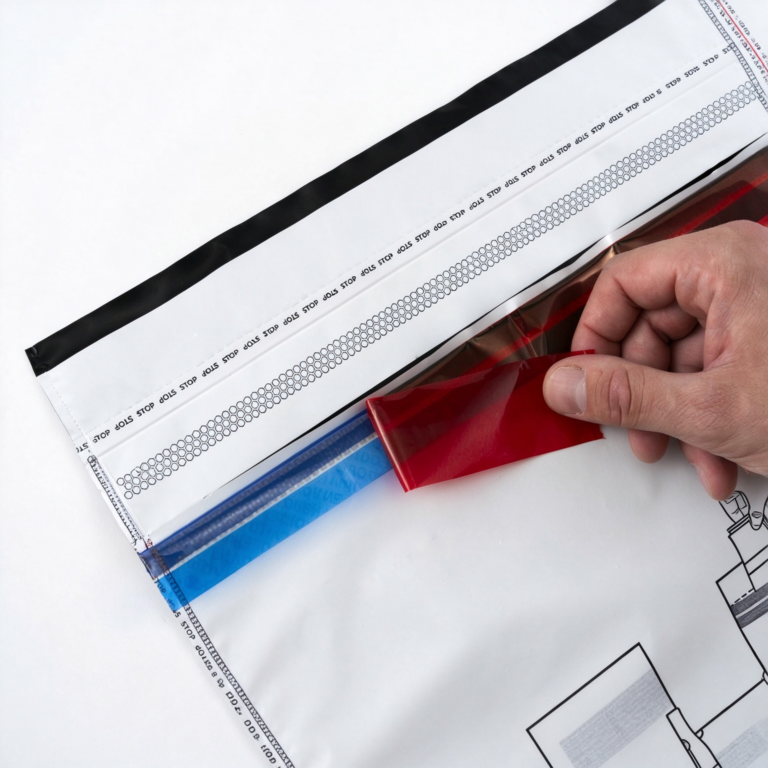
A poorly specified deposit bag can be opened, resealed, mislabeled, or damaged in transit, leaving a cash office with an avoidable investigation. For procurement teams evaluating a tamper-proof security bag supplier, the central question is not simply whether the bag closes. It is whether the complete bag-and-seal system preserves evidence, supports custody control, and performs consistently across daily cash operations.
The common industry term is tamper-evident, rather than tamper-proof. No physical package can prevent every determined attempt to access its contents. A properly designed security bag makes unauthorized opening visible, difficult to conceal, and easier to document. That distinction should shape the technical specification, supplier audit, and incoming quality inspection process.
Cash bags serve different roles in a branch, retail cash office, armored transport route, casino count room, or currency-exchange operation. Some hold deposit slips and notes between a store and a bank. Others are used for internal transfers between tills, vaults, cash recyclers, and reconciliation teams. The risk profile changes with the route, handoffs, contents, and time in custody.
A useful specification starts with the operational failure the bag must prevent or reveal. For deposit applications, a high-visibility irreversible seal and unique identification number are usually essential. For internal cash movement, clear bag panels, writable fields, and easy scanning may improve reconciliation. For long-distance transportation, stronger film construction, seam strength, and resistance to puncture or moisture may deserve more attention.
The bag should also fit the cash process around it. Oversized bags waste storage space and can allow contents to shift excessively. Bags that are too small may stress seams or create delays during packing. If sealed note packets, coin rolls, vouchers, and deposit records travel together, procurement should test the actual load rather than approving a sample containing only loose paper.
The strongest supplier evaluation combines engineering evidence with practical production controls. A polished sample is not enough. Buyers should confirm that the approved sample can be repeated across volume orders, lot after lot, without unexpected changes in adhesive, film thickness, printing, or serial-number control.
The closure is the security feature that matters most. A bag may use a permanent pressure-sensitive adhesive, a destructible tape, a void-message seal, or a closure designed to show opening through color transfer or material distortion. Ask the supplier exactly what visual evidence appears when the seal is disturbed and whether that evidence remains clear after handling, temperature changes, dust exposure, or pressure from stacked bags.
There is a trade-off between aggressive adhesive and usability. A seal that bonds too quickly can create errors during high-volume packing. A weak closure can be lifted or manipulated. The right design depends on whether staff need a short alignment window before final closure and whether bags may be exposed to heat in vehicles or warehouses.
Request test information for peel resistance, seal adhesion, seam strength, and puncture resistance. The most useful evidence identifies the test method, sample condition, and acceptance criteria. General statements such as “high security” do not give an operations team a measurable basis for comparison.
Every bag used in an accountable cash route should support traceability. Sequential barcodes, human-readable serial numbers, QR codes, and writable custody panels can all be useful, but they must match the organization’s process. A barcode that cannot be reliably scanned under warehouse lighting or through a clear protective film creates manual work at the point of reconciliation.
Ask how serial numbers are generated and protected from duplication. For multi-location programs, determine whether number ranges can be assigned by branch, region, customer account, or bag type. Also confirm whether the supplier can provide production records showing the serial-number range delivered in each shipment.
Printed fields should be practical, not decorative. A cash office may need space for date, origin, destination, preparer, verifier, declared amount, and route reference. If staff write with ballpoint pens, permanent markers, or thermal-transfer labels, test those materials on the finished bag. Ink smearing and label lifting are small defects that become costly when a dispute occurs.
Film thickness is easy to quote, but it does not independently determine performance. The material blend, seal design, seam welding process, and bag geometry all influence durability. A clear polyethylene bag may be sufficient for short internal transfers, while multilayer film or reinforced seams may be justified for external transport and repeated handling.
Buyers should define exposure conditions in advance. Consider sharp coin edges, stapled documents, humid storage rooms, cold climates, vehicle heat, and friction against crates. If opaque bags are required for privacy, verify that opacity does not interfere with printed code readability or inspection requirements.
Color is also functional. Distinctive bag colors can separate deposits, rejected notes, foreign currency, ATM cassettes, or high-value transfers. However, color consistency should be controlled across repeat orders. A slight shade difference may not affect bag strength, but it can confuse a visual sorting process that depends on standardized colors.
A capable supplier should be able to explain its incoming material checks, in-process inspections, finished-product sampling, and corrective-action method. For security bags, inspection should cover dimensions, film appearance, seam quality, closure placement, adhesive coverage, print registration, barcode readability, and serial-number sequence.
Ask for samples from more than one production batch when the program is significant. This is one of the most practical ways to identify variation. Test bags with real cash packets, actual labels, and the scanners used at receiving locations. It is better to identify a barcode contrast issue during qualification than after thousands of bags have entered a cash logistics network.
Customization requires extra discipline. A custom logo, warning message, serialized barcode, or special writable panel should be checked against an approved artwork proof. Confirm who controls version changes and whether the supplier will prevent obsolete artwork from being used after a redesign.
The lowest unit price may not produce the lowest landed operating cost. Security bags are consumables, but stockouts can interrupt deposit processing, force staff to use unsuitable substitutes, and weaken documented custody procedures. Procurement should assess lead time, minimum order quantities, packaging configuration, production capacity, and shipment planning alongside the bag specification.
For international purchasing, carton dimensions and moisture protection matter. Bags can be damaged by compression or contaminated by dust if outer cartons are weak or poorly sealed. Define the number of bags per inner pack and carton so warehouse teams can receive, count, and issue stock efficiently.
A supplier should also communicate clearly in English about artwork approval, pre-production samples, inspection standards, and shipment documents. BCASH approaches international cash-processing procurement with this same practical focus: equipment, consumables, technical communication, quality inspection, and export coordination should support one accountable operating process rather than create separate purchasing problems.
Before releasing a large order, establish a written qualification plan with the supplier. It should identify the approved material, dimensions, closure design, artwork revision, numbering format, packaging method, and inspection criteria. Keep a retained reference sample at both the buyer and supplier locations.
Then define what happens when a defect is found. The supplier should be able to trace the affected lot, investigate the cause, contain remaining inventory, and provide a corrective action. This is especially relevant for missing numbers, duplicate serial ranges, weak seals, unreadable codes, and printing errors that affect custody records.
Security bags work best when they are treated as part of the cash-control system, not as generic packaging. Select a supplier that can prove repeatable closure performance, traceable identification, controlled production, and reliable export execution. That discipline gives cash operations a clearer record of every handoff, even when the bag itself never needs to be questioned.
 China Thermal Shrink Packing Machine Buying Guide
 Choose a Temper Proof Security Bag Supplier
 Coin Sorter and Counter Selection for Cash Offices
 The Future of Cash Processing Will Be Hybrid
 POS Safe Cash Management for Retail Cash Offices
