
Categories
- Blogs (12)
- Currency Solutions (2)
A coin room can lose money long before a shortage appears on a report. Slow manual counts, mixed denominations, foreign coins, damaged pieces, and inconsistent bag fills all create reconciliation risk. A commercial coin sorting machine turns that unpredictable work into a controlled processing step, provided the machine is selected for the actual cash volume, coin mix, and downstream packaging process.
For banks, armored cash operations, casinos, supermarkets, transit operators, and currency-exchange businesses, the purchasing question is not simply how many coins a unit can count per minute. The better question is whether the equipment can maintain denomination accuracy, reject exceptions, support the required output format, and continue operating during demanding shifts.
A commercial coin sorter separates mixed loose coins by denomination, counts each denomination, and provides a total count or value result. Depending on the machine design, sorted coins may be directed to collection bins, bags, tubes, or integrated wrapping stations.
This differs from a basic coin counter. A counter may measure the quantity or value of a pre-sorted denomination, while a sorter must identify each coin and route it correctly. For operations receiving mixed deposits from multiple locations, sorting capability is the function that removes the greatest amount of manual handling.
Commercial equipment generally uses mechanical sizing, thickness measurement, sensor-based recognition, or a combination of these methods. The selected method affects how well the machine handles worn coins, debris, tokens, foreign coins, and local currency variations. Buyers should assess the recognition method against the coins that will actually enter the hopper, not only against clean sample coins used during demonstrations.
Capacity claims can be misleading when they are viewed without operating context. A machine rated for high throughput may be ideal for a central cash office but excessive for a single retail location. Conversely, a lower-capacity desktop sorter can become a bottleneck when several branches send mixed coin deposits at the same time.
Estimate the average daily volume, peak-day volume, and the longest acceptable processing window. Also consider how coins arrive. Loose mixed coins, sealed bags, till contents, vending collections, and transit fare receipts place different demands on hopper capacity and operator workflow.
A practical specification should define more than coins per minute. It should include expected batch size, number of daily batches, denominations processed, reject rate, output method, and staffing level. For example, an operation processing several thousand coins per day may prioritize easy bin removal and fast batch reporting. A cash center processing much larger deposits may need bagging, automatic stop functions, higher hopper capacity, and equipment designed for repeated duty cycles.
Published speed is only one part of productive output. A sorter that runs quickly but requires frequent hopper refills, bin changes, jam clearing, or manual recounts may produce less usable work than a moderately rated machine with better collection capacity and rejection control.
Ask suppliers how the stated speed is measured. Is it based on a clean, single-currency sample? Does the rate include sorting only, or sorting and bagging? What happens when the machine identifies a suspicious or nonconforming item? These questions help procurement teams compare machines on an operational basis rather than on a catalog number alone.
Sorting accuracy protects both labor efficiency and financial control. A commercial coin sorting machine should reliably separate the intended denominations while sending unacceptable items to a dedicated reject path where possible. Reject handling is especially valuable in deposits that may contain tokens, washers, bent coins, foreign currency, or coins outside the supported denomination set.
Coin condition matters. Heavily circulated coins may have wear, dirt, oxidation, or slight deformation. Equipment that performs well with new coins can require adjustment or more frequent maintenance when used with older circulation stock. A supplier should be able to explain supported coin parameters, tolerance settings, calibration procedures, and expected behavior with worn coins.
For multi-country cash operations, currency configuration deserves early attention. Coin diameter, thickness, material, and denomination structure vary widely. A machine configured for U.S. coins should not be assumed to support another market without a confirmed specification. Importers and distributors should clarify whether currency sets can be changed by software, by hardware components, or by a factory configuration before shipment.
The output arrangement should follow the next step in the cash process. Collection bins are suitable when staff will manually verify, transfer, or package sorted coins. Bagging arrangements are better suited to higher-volume operations that consolidate coins for vault transfer or armored pickup. Tube filling or wrapping functions can reduce a further manual step for retailers, banks, and cash offices that distribute rolled coin.
Integrated coin wrapping can improve consistency, but it also adds a consumable requirement and should be evaluated as a complete process. Confirm the wrapper formats, paper specifications, roll capacity, changeover time, and whether the machine stops automatically when a denomination reaches its selected quantity.
A machine that creates accurate denomination totals but produces awkward handoffs can still slow a cash room. The physical layout matters: bin access, bag attachment, control-panel position, reject-bin visibility, and clearance for operators moving full bags all affect shift efficiency.
Cash-processing equipment should support reconciliation, not just counting. Batch totals, denomination breakdowns, cumulative totals, and clear/reset controls help operators document what entered the machine and what was produced. The required reporting level depends on the environment.
A supermarket back office may only need reliable batch totals per register or store deposit. A bank, casino, or armored cash operation may require more detailed records, operator accountability, and a defined process for investigating rejected items. If printer output, connectivity, or data export is required, verify the specific interface and report format during procurement. These features are not universal simply because they appear on a related model.
Control access also deserves consideration. Simple operator menus reduce training time, while supervisor settings can prevent unauthorized changes to coin configuration, batch limits, or machine parameters. The goal is not to add complexity. It is to make repeatable cash procedures easier to enforce.
Coins carry dirt, metal dust, paper debris, and residue into the machine. Over time, this material can affect sensors, belts, rails, counting paths, and moving parts. Maintenance access is therefore a purchasing issue, not an afterthought.
Before selecting a model, review the cleaning points, daily operator tasks, recommended service intervals, wear parts, and jam-clearance procedure. A design with accessible coin paths and clear maintenance instructions can reduce downtime significantly. Procurement teams should also ask whether spare parts, replacement bins, belts, sensors, and technical documents are available for the intended market.
Electrical requirements must be matched to the installation country. Confirm voltage, plug type, safety requirements, and any required inspection documentation before shipment. For overseas buyers, this is part of landed procurement value: a lower purchase price has limited value if installation is delayed by an incorrect power configuration or unavailable replacement component.
Commercial coin equipment is a mechanical and configuration-sensitive product. Supplier capability influences the result as much as the headline specification. A qualified manufacturer should provide clear technical communication, defined quality inspection procedures, accurate packing information, and support for currency configuration or OEM requirements when needed.
Request a specification that states supported denominations, sorting speed, hopper capacity, collection capacity, reject function, display information, power requirements, dimensions, net weight, and available output options. If the application is unusual, provide sample coins or detailed measurements early. This is particularly relevant for regional currencies, specialized tokens, or mixed cash streams with a high proportion of non-coin items.
For distributors, private-label requirements, packaging, manuals, and spare-parts planning should be addressed before the production order. For end users, acceptance criteria should be agreed in advance: which coins will be tested, what sorting accuracy is expected, and how exceptions will be handled. BCASH supports this type of one-stop service through technical communication, quality control, and export coordination for cash-handling equipment buyers.
The most effective purchase request describes the operating problem rather than asking only for the lowest-priced sorter. State the currency, daily and peak coin volume, type of deposits, preferred output, local power requirement, service expectations, and any need for custom branding or packaging. This allows the supplier to recommend a configuration that fits the process instead of offering a generic model.
A commercial coin sorting machine should earn its place by shortening reconciliation time, reducing avoidable handling errors, and creating predictable output for the next cash-processing stage. The right unit is the one that keeps moving when deposits are mixed, busy periods arrive, and the cash office cannot afford a second count.
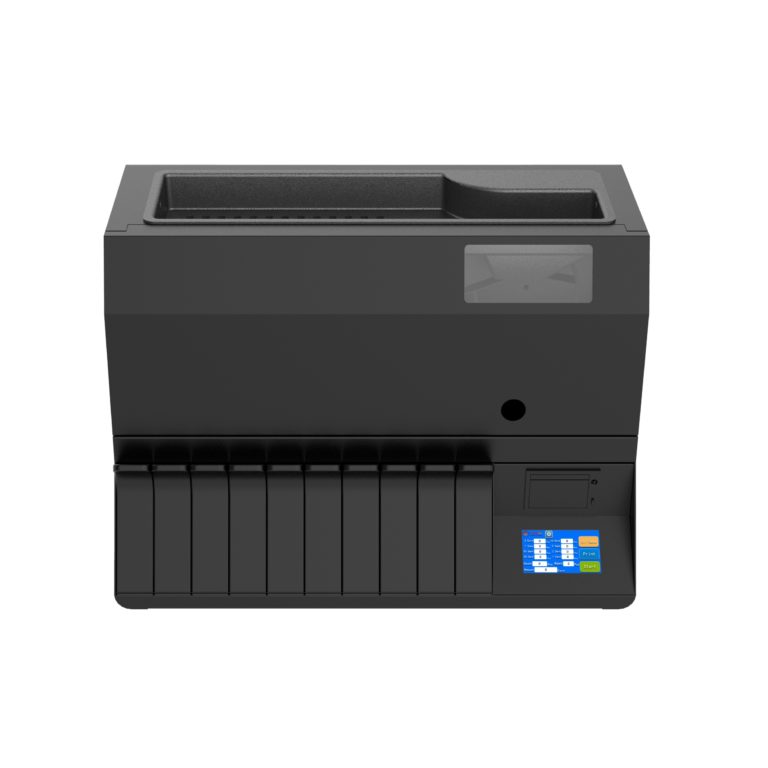 Commercial Coin Sorting Machine Buying Guide
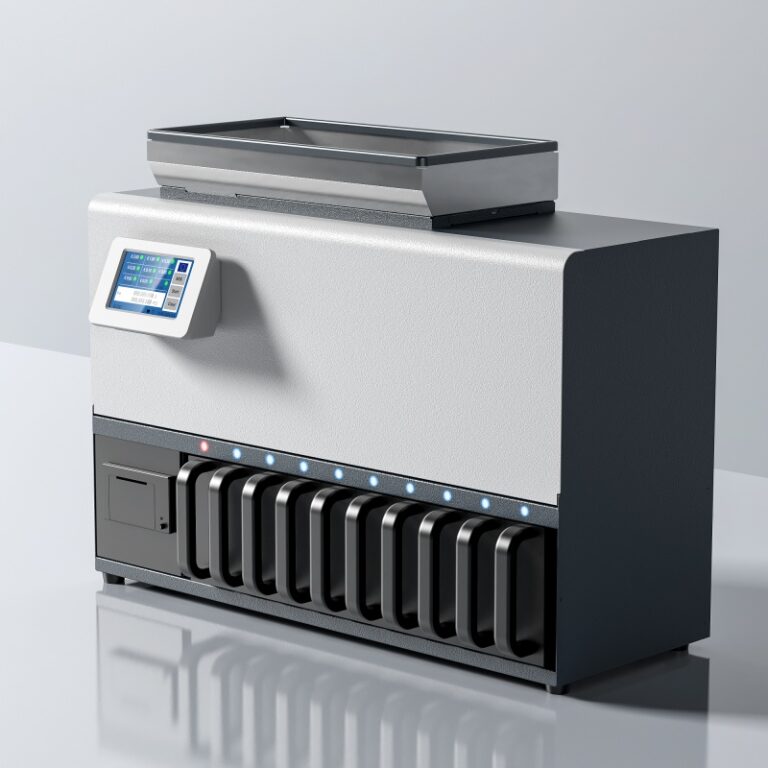 Fake Coin Detection Equipment for Cash Operations
 How a Mixed Denomination Currency Counter Pays Off
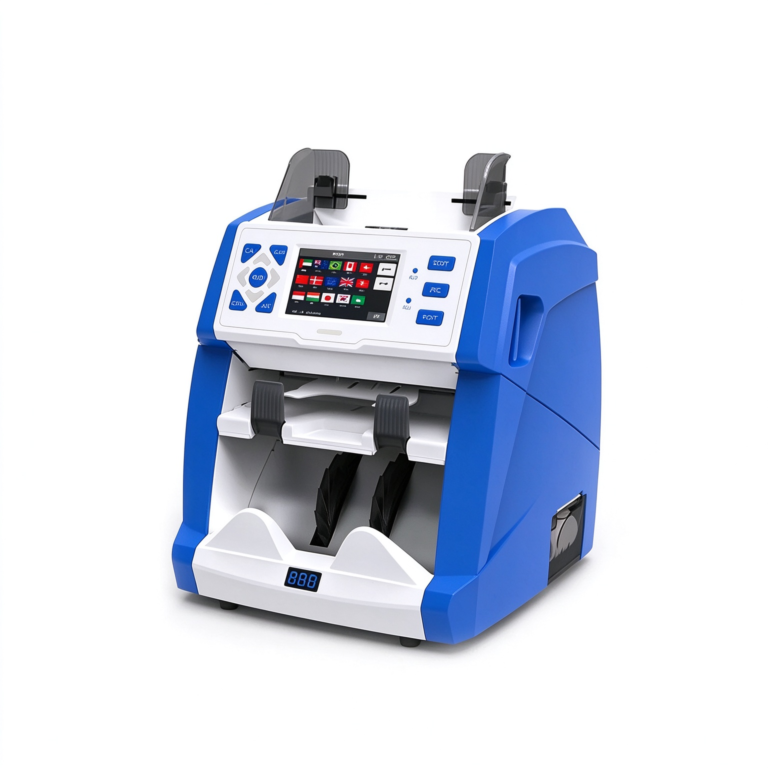 How Banknote Glue Tape Detection Protects Cash Flow
