
Categories
- Blogs (14)
- Currency Solutions (2)
A cash center can count and verify a bundle perfectly, then lose time and control at the final packaging step. Loose notes re-expand, hand-wrapped packs vary in size, and poorly sealed bundles create avoidable handling questions during storage, transfer, or vault reconciliation. A vacuum banknote packing machine addresses that final-stage problem by compressing counted notes into dense, sealed packages that are easier to transport, stack, identify, and audit.
For banks, armored cash operations, currency exchanges, casinos, retail cash offices, and cash-processing contractors, the purchase decision is not simply about vacuum pressure. The machine must match the actual note flow, bundle format, packaging material, service conditions, and upstream counting equipment. Selecting the right configuration protects throughput while reducing the labor and inconsistency associated with manual cash packing.
A vacuum banknote packing machine removes air from a prepared pack of banknotes and heat-seals the bag around it. The resulting package is compact, stable, and visibly secured. Most operations use this process after notes have been counted, sorted, authenticated, strapped, or assembled into a defined quantity.
The operational value comes from repeatability. Every pack can be produced with a similar compression level and seal appearance, making it easier to arrange inventory in cash boxes, safes, vault shelves, and transport containers. Vacuum packaging also helps limit exposure to dust and moisture during normal storage and handling, although it should not be treated as a substitute for controlled environmental conditions or secure cash-management procedures.
This equipment is particularly useful where large volumes of same-denomination notes move between branches, cash depots, retailers, or logistics providers. A compact pack requires less space than a loose or lightly wrapped bundle. It is also less likely to shift, snag, or become disorganized during movement.
Procurement teams should begin with the workflow, not a catalog specification. Ask where the machine will sit and who will operate it. A high-volume central cash room has different requirements from a currency exchange counter or a supermarket back office.
First, define the bundle quantity and note mix. A machine used for uniform packs of 100 or 1,000 sorted notes can be optimized for predictable dimensions. Operations handling worn, curled, mixed-condition, or polymer notes may need more adjustment capability because pack thickness can vary. If different currencies are processed, test representative notes rather than relying on a nominal bundle capacity.
Second, determine whether vacuum packing follows strapping or replaces part of the existing wrapping process. In many cash centers, strapping and vacuum sealing serve different purposes. Straps maintain bundle identity and help operators handle notes before bagging; vacuum packaging adds compression and tamper-evident closure for storage or transfer. The best sequence depends on internal procedures and destination requirements.
Third, calculate peak demand rather than average daily volume. A machine that appears adequate during normal hours can become a bottleneck during end-of-day retail deposits, holiday peaks, payroll cycles, or branch consolidation runs. Include loading, evacuation, sealing, cooling, labeling, and operator handling time when estimating practical output.
The chamber must accommodate the largest intended note bundle and bag format with working clearance. Oversizing is not always better. A chamber that is far larger than the pack can increase cycle time and consume more space. However, a machine with too little clearance makes loading difficult and limits future flexibility.
Ask for usable chamber dimensions, not only external machine dimensions. Confirm whether the stated capacity refers to a loose stack, a strapped bundle, or a finished bagged pack. These are not interchangeable measurements.
A stronger vacuum can produce a denser package, but maximum compression is not automatically the right target. Excessive compression may crease fragile paper notes, create sharp bundle edges, or make later handling less convenient. The appropriate vacuum setting depends on note condition, denomination, paper stock, polymer content, bag thickness, and required package appearance.
Adjustable vacuum and sealing time give the operator practical control. For multi-currency environments, stored settings or simple parameter adjustment can reduce changeover errors. A consistent cycle is generally more valuable than an aggressive cycle that produces occasional seal failures.
The seal is the critical point of the package. A wide, even heat seal provides more confidence than a narrow or irregular line. The machine should maintain stable heating performance over continuous operation, while allowing settings to be adjusted for compatible bag materials.
Purchasers should specify the intended bag type early. Film thickness, width, material composition, and opening orientation all affect machine setup and finished-pack quality. A supplier should be able to confirm compatible consumables and provide samples for production testing. Testing with generic bags only after delivery can create unnecessary commissioning delays.
Cash-processing environments are demanding. Dust from notes, adhesive residue from straps, and frequent operator use can affect moving parts and sealing surfaces. A practical machine has an industrial structure, accessible maintenance points, and components that can be inspected without extensive disassembly.
Evaluate the vacuum pump type, expected maintenance intervals, availability of wear parts, and the process for replacing heating elements or sealing strips. A lower initial purchase price has limited value if a minor consumable issue stops a packing line for weeks.
Vacuum packing should be treated as part of a controlled cash-processing line. The package is only as reliable as the count and verification process before it. When counterfeit detection, fitness sorting, denomination recognition, and batch accounting occur upstream, the packing step becomes a physical confirmation of an already documented cash unit.
For that reason, many buyers source note counters, value counters, sorting machines, strapping equipment, and packing equipment as a coordinated group. This can simplify communication on bundle sizes, output flow, power requirements, operator training, spare parts, and acceptance testing. BCASH supports this one-stop procurement approach with cash-handling equipment and technical communication for overseas buyers.
Integration does not necessarily require a fully automated conveyor line. In many facilities, a well-designed manual handoff between counter, strapper, and vacuum packer is the most economical approach. The decision depends on volume, labor cost, available floor space, and the level of traceability required by the operation.
A supplier quotation should describe more than the machine model and unit price. Request confirmation of power supply, plug standard, chamber dimensions, vacuum pump specification, sealing-bar dimensions, cycle time under a defined test condition, compatible bag parameters, machine net weight, and export packing method.
It is also useful to clarify what is included for commissioning. Ask whether the price includes initial consumables, spare sealing wire or tape, operating instructions in English, electrical diagrams where applicable, and remote technical support. For distributors, ask about private labeling, carton design, spare-parts supply, and the ability to support repeat orders with consistent specifications.
Factory testing should reflect the intended use. Provide samples of the target currency and bags when possible. A demonstration using clean, new notes may not represent field performance with circulated notes that have folds, edge wear, or varying moisture content. Confirm the final pack appearance, seal integrity, and cycle consistency before shipment.
For international procurement, also consider landed requirements: packaging durability, export documentation, lead time, replacement-parts planning, and communication during inspection. A technically capable machine can still become a poor purchase if these details are not managed clearly.
Operators should inspect bags before use and keep the sealing area clean. A small piece of paper, dust, or folded film across the seal line can compromise an otherwise good package. Notes should be aligned before loading, particularly when the pack includes heavily circulated currency.
Do not use vacuum packing to conceal a count discrepancy or an uncertain bundle. The count, denomination, and identification record should be confirmed before sealing. Where audit requirements are strict, apply labels or barcodes immediately after packing and connect the package ID to the upstream transaction record.
Routine maintenance is straightforward but should be scheduled. Clean the chamber and seal area, inspect the sealing strip and heating element, check the vacuum pump according to the manufacturer’s schedule, and replace worn components before they affect finished-pack quality. Keeping a small stock of critical consumables is a practical safeguard for high-volume sites.
The right vacuum banknote packing machine is one that produces stable, repeatable packages at the pace of the surrounding process. A compact unit may be the sensible choice for a branch network or exchange operation. A larger chamber, stronger duty cycle, and planned spare-parts support may be justified for a central cash depot running continuous shifts.
Before selecting a model, use your actual notes, bundles, bags, and peak-volume assumptions to define the application. That discipline turns vacuum packaging from a simple finishing task into a controlled step that supports cleaner storage, faster transfer, and more accountable cash operations.
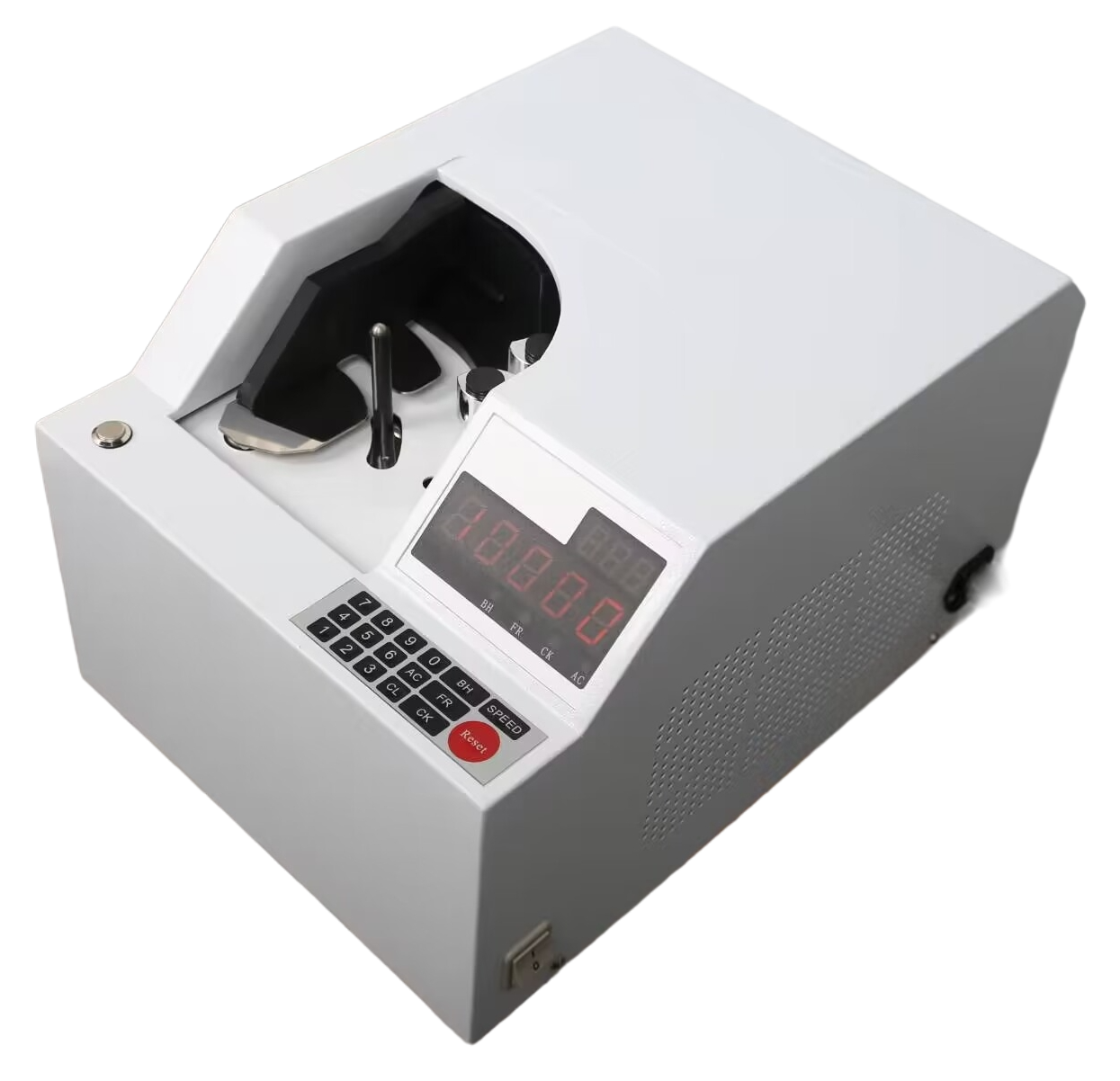 Vacuum Banknote Packing Machine Buying Guide
 Counterfeit Detection for High-Volume Cash
 Commercial Coin Sorting Machine Buying Guide
 Fake Coin Detection Equipment for Cash Operations
